


Levla: Habit Tracker RPG
4.834.00 Reviews
App Specs
- Version
- 1.0.4
- Updated On
- License
- Free
- Downloads
- 10,000+
- Developer
- Turbo Labs SE
- Categories
- Productivity
- Platform
- Android
Screenshots
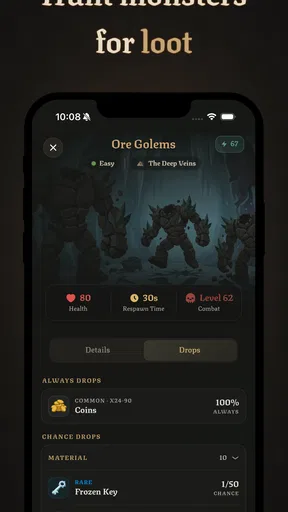
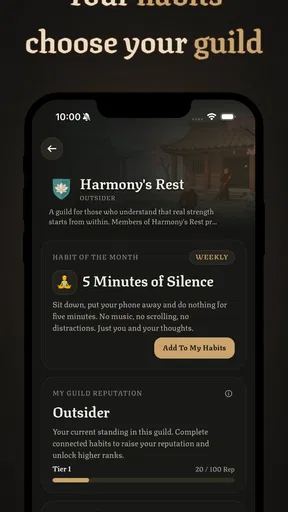
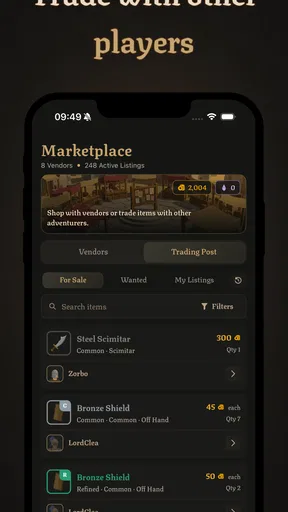
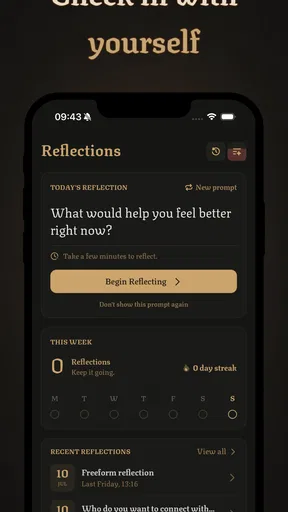
 Analysis by AppCompare
I approached Levla: Habit Tracker RPG as a productivity app with a game-like idea at its center: everyday actions should feel more motivating when they contribute to the growth of a character. That concept is easy to understand, but the real question is whether it helps me follow through after the novelty wears off. My impression is that Levla will appeal most to people who already enjoy role-playing games and want a more playful way to organize personal routines.
It is free to start, aimed at everyone, and developed by Turbo Labs SE. The app has earned a 4.8 average from around 470 ratings, with more than 10,000 installs, which gives it a promising early presence without making it feel like an established, universally tested platform. Its current version is 1.0.4, released on June 24, 2026, so I see it as an early product whose direction may still matter as much as its present feature set.
How Levla turns routines into a personal progression system
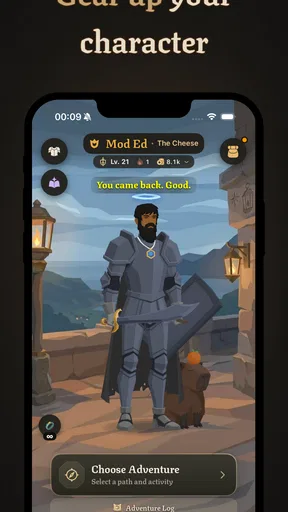
The strongest part of Levla is its framing. Instead of treating a habit as another box to tick, it presents personal improvement as progress for an RPG-style character. That small change in language can make a difference. “Exercise,” “read,” or “practice a skill” can feel repetitive in a conventional tracker, while a character-based approach gives the action a sense of movement and identity.
I would not use it because I need a complex project-management system. I would use it when I want a gentle push to keep promises to myself. The app belongs in the space between a standard habit tracker and a lightweight game: more engaging than a plain checklist, but presumably less demanding than a full role-playing game that expects long sessions and detailed decisions.
The idea works particularly well for users who respond to visible progress. If seeing a character level up makes a routine feel meaningful, Levla can turn consistency into something I want to protect. That is a different motivation from reminders alone. A notification tells me what I planned; a game-like progression system can remind me why continuing might be satisfying.
There is also a useful psychological trade-off here. Gamification can make a difficult routine easier to begin, but it cannot remove the difficulty of the routine itself. Levla may help me open the book, put on my shoes, or start a practice session. It cannot guarantee that the habit fits my schedule or that the goal is realistic. I would therefore treat it as a motivation layer, not as a replacement for thoughtful planning.
The current experience is best for small, repeatable goals
For a new user, I would begin with only a few habits. The temptation with any tracker is to create a complete ideal version of myself immediately: daily fitness, perfect sleep, constant reading, language study, household chores, and more. That approach usually creates pressure rather than momentum. Levla’s RPG presentation is better used with a compact set of actions that I can genuinely repeat.
Worth Reading Before You Choose

EA SPORTS FC Mobile 26 Is a Bigger Football Game, but It Takes Time

Flipboard Shows What News Apps Must Do Beyond the Feed

Switching to Android Auto Means Rethinking Your Driving Routine

Google Calendar Makes a Crowded Week Easier to Manage

Ludo King Makes the Most of the Minutes Between Plans

Baby Panda World Brings Quick Play to Modern Phones, but Its Game Library Feels Busy
A practical starting point would be one health-related habit, one personal-development habit, and one routine task. This creates variety without turning the app into a second job. After a week or two, I could decide whether the system is helping me act or merely encouraging me to maintain an attractive list.
One non-obvious advantage of this approach is that the character can become a visual record of consistency rather than a scoreboard against other people. I would focus on building a private progression loop: choose an action, complete it, acknowledge the progress, and return tomorrow. That makes the app more suitable for personal accountability than for users who need competition or social pressure.
The reverse is also true. If I dislike game mechanics in productivity tools, the RPG layer may feel like decoration between me and a simple task. Someone who wants a fast, silent checklist may be happier with a minimalist habit tracker. Levla is making a deliberate choice about presentation, and that choice will be motivating for some people and distracting for others.
What the version and release timing suggest
Version 1.0.4 indicates that the app is already beyond its first public build, but it is still early enough that I would approach it with reasonable expectations. A version number like this suggests ongoing refinement rather than a mature ecosystem with years of accumulated options. That is not automatically a weakness. Early users can benefit from a focused experience before a product becomes crowded with menus and secondary systems.
At the same time, I would pay attention to how the developer handles the basics as the app evolves. For a habit tool, reliability matters more than flashy additions. A user needs confidence that completed actions remain recorded, that the progression feels understandable, and that the routine does not become confusing when a day goes badly. Those are the areas where future updates will have the greatest effect on trust.
The release date also helps set the right expectations. Since Levla arrived on June 24, 2026, I would judge it as a young productivity product rather than compare it directly with long-established habit platforms that have had much longer to expand. Its appeal currently comes from its focused identity: it is trying to make self-improvement feel like character development.
I would be cautious about assuming that every feature associated with a traditional RPG is present. The name and presentation communicate the direction, but I would not build my decision around imagined quests, combat, classes, social systems, or elaborate reward economies. The useful test is simpler: does the available progression make me more likely to complete my chosen habits?
How it fits into an ordinary day
Imagine a weekday when I wake up late, work through a busy morning, and have little enthusiasm left by evening. A normal tracker might show a list of unfinished items, which can make the day feel like a failure. With Levla, I would want to identify one manageable action that keeps the chain of self-improvement alive, such as a short workout or a brief study session. Completing that action gives the day a concrete win without pretending that every goal was achieved.
That scenario reveals an important strength: the app can make partial success feel visible. A habit system is more useful when it supports recovery instead of turning one missed task into abandonment. I would still want to set honest expectations, but the RPG framing gives me a reason to return after an imperfect day.
Another realistic use is a transition period. Someone starting a new job, moving home, or preparing for an exam may need structure but may not have the energy for a complicated productivity method. Levla could serve as a small daily anchor. I would choose actions that are under my control, such as reviewing notes or preparing clothes for the next morning, rather than broad goals like “be more organized.”
For families, the Everyone age rating makes the app broadly approachable, but I would still use it according to the individual user’s maturity and goals. A younger person may enjoy the character idea immediately, while an adult may appreciate it as a way to make repetitive routines less dull. The same design can serve both groups, although the best habits will differ.
Where it differs from ordinary alternatives
A conventional habit tracker usually emphasizes calendars, streaks, reminders, and completion history. That model is useful because it is direct. I can see what I planned and whether I did it. Levla’s distinction is emotional rather than administrative: it tries to make the result feel like progress in a personal game.
Compared with a notes app, Levla should offer a clearer sense of commitment. A note can hold intentions, but it rarely gives those intentions a dedicated feedback loop. Compared with a task manager, Levla is less suited to projects with dependencies, deadlines, files, and multiple collaborators. I would not replace a work-planning tool with it.
Compared with a fitness-specific app, Levla is likely to be broader and less specialized. If I need detailed training plans, exercise instruction, or performance analysis, a dedicated health product would be the better choice. Levla makes more sense when fitness is one part of a wider personal routine.
The most important comparison is with a plain habit tracker. If I already enjoy checking boxes and reviewing charts, a simpler alternative may be faster and more informative. If I repeatedly install trackers but stop using them because they feel lifeless, Levla’s character progression is the feature worth trying. The choice depends less on the number of tools and more on what kind of feedback keeps me returning.
Practical ways to get more from the RPG approach
I would use a “minimum version” for every demanding habit. Instead of defining exercise as a long session, I might define the smallest acceptable action that keeps the routine alive. This prevents the character system from becoming an all-or-nothing test. On a strong day, I can do more; on a difficult day, I can preserve the habit with a realistic minimum.
I would also separate habits from outcomes. “Write for fifteen minutes” is something I can complete. “Finish a novel” is an outcome that depends on many sessions. Levla’s progression is more useful when I attach it to repeatable behavior rather than a result that may take weeks or months to appear.
A third useful workflow is to give each habit a clear time or context outside the app. For example, I might connect reading with the evening tea routine, or connect planning with the final few minutes of the workday. The app can record the action, but the environment supplies the cue. This combination is stronger than opening the tracker randomly and hoping motivation appears.
I would review the list whenever a habit repeatedly fails. The right response is not always “try harder.” The habit may be too vague, too large, or placed at the wrong time. Levla can show me that a routine is not sticking, but I still need to diagnose the reason. That is one of the app’s limits and also a useful reminder: game feedback is not the same as personal insight.
Costs, access, and the point where I would hesitate
Levla is free to download and use at its entry level, which makes experimentation easy. There are in-app purchases ranging from $5.99 to $149.99 per item, so I would inspect the purchase screen carefully before committing to anything beyond the free experience. The broad range means the financial decision may vary considerably depending on which optional content or access level is offered.
For me, the free starting point is important because the app’s value is highly personal. I would first see whether the character-based system changes my behavior over several ordinary weeks. If I only enjoy setting up habits but do not complete them, paying more would not solve the underlying problem. If the progression genuinely helps me return, an optional purchase could be easier to justify.
This is also where Levla may not suit someone who wants a completely free, predictable utility. A user who dislikes in-app purchases in productivity tools may prefer an app with a single transparent payment or a basic open-ended tracker. Likewise, anyone who needs advanced planning, detailed analytics, or professional workflow management should look elsewhere rather than expect this app to grow into a full productivity suite.
The minimum operating-system requirement is Android 8.0, so the app is accessible on many older Android devices. That is helpful for people who do not upgrade frequently. I would still keep the app’s lightweight daily role in mind: its usefulness comes from being easy to revisit, so a device that struggles with modern apps could affect the experience even when it technically meets the requirement.
What existing users should watch as Levla develops
For current users, the next meaningful signs of progress will be consistency and clarity. I would watch whether updates make habit setup easier, explain progression more clearly, and help users recover from missed days without undermining the sense of achievement. Those improvements would strengthen the central idea without changing what makes Levla distinctive.
I would also watch the balance between motivation and pressure. A good RPG-inspired tracker should make progress enjoyable, not make a missed day feel like losing a game. If future changes add too many rewards, currencies, or layers, the original habit may become secondary. The best evolution would keep the daily action obvious even as the character system becomes richer.
Another point worth observing is whether the app remains useful for different kinds of habits. A system that works for exercise may feel less natural for creative work, household tasks, or emotional well-being. Levla will be stronger if its progression can accommodate these differences without forcing every goal into the same mold.
Because the app is still young, I would also look for evidence that the developer is responding to ordinary friction: editing a habit, correcting a missed entry, understanding progress, and returning after a break. These details rarely appear in a short store description, but they decide whether a tracker becomes part of my day or gets forgotten after installation.
My recommendation after weighing the trade-offs
I recommend Levla to someone who wants a more playful way to build everyday routines and already understands why RPG progression can be motivating. Its strongest promise is not that it will organize every part of life. It is that a small, repeatable action can feel connected to a larger personal journey.
I would skip it if I need a serious task-management system, specialist health coaching, collaborative planning, or highly detailed reporting. I would also skip it if game elements make productivity feel less authentic. In those cases, a focused alternative will probably be clearer and less distracting.
For everyone else, the sensible approach is to start small, choose habits that can be completed in real life, and judge the app by behavior rather than by how attractive the character progression feels. The free entry point makes that test relatively easy, while the early version status means I would keep expectations measured.
My final view is positive but grounded: Levla has a clear personality in a crowded productivity category, and that personality may be exactly what helps a reluctant tracker user stay engaged. It is not a substitute for planning, discipline, or specialized tools. Used as a compact motivation layer, though, it gives ordinary routines a sense of direction that a plain checklist often lacks. Its real success is measured by whether I come back tomorrow and take the next small step.
Pros
- Turns daily habits into engaging RPG-style quests.
- Clear progress tracking makes routines easier to maintain.
- Customizable habits support different personal goals.
- Reward system adds motivation without requiring social competition.
- Clean interface is easy to understand after a short setup.
Cons
- Some useful features may be restricted to the premium version.
- RPG rewards can feel repetitive after extended use.
- Requires consistent manual check-ins to keep progress accurate.
- Too many habit reminders may become distracting for some users.
- Limited appeal for users who prefer a simple
- non-gamified tracker.
FAQs for Levla: Habit Tracker RPG
What is Levla: Habit Tracker RPG, and how does it work?
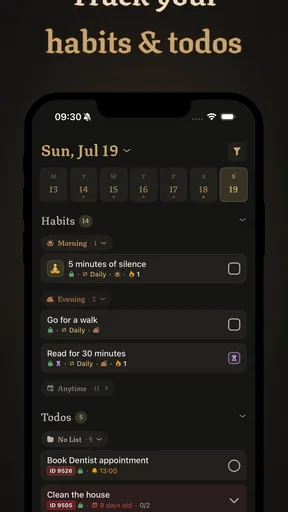
Levla: Habit Tracker RPG combines habit tracking with role-playing game mechanics. You create daily or recurring habits, mark them as completed, and use your progress to develop an in-game character. The RPG-style rewards are designed to make routines feel more motivating, while the tracker itself helps you review consistency and identify habits that need more attention.
Is Levla: Habit Tracker RPG suitable for beginners who have never used a habit tracker?
Yes. Levla is generally approachable for beginners because its main idea is straightforward: choose habits, define how often you want to complete them, and record your progress. The RPG elements may take a little time to understand, but they add motivation rather than making the essential tracking features complicated. Starting with two or three realistic habits is usually the best way to get comfortable.
What kinds of habits can I track in Levla?
The app can be used for many different routines, including exercise, reading, studying, drinking water, meditation, sleep schedules, household tasks, and personal goals. You can typically create habits that match your own lifestyle instead of relying only on preset suggestions. Before downloading, remember that the app’s usefulness depends on entering clear, manageable goals and recording them consistently.
Does Levla: Habit Tracker RPG require an internet connection or account?
The exact requirements can depend on the current version and the platform you use. Basic habit tracking may be available without being constantly connected, but features such as synchronization, backups, advertisements, purchases, or online services may require internet access. Check the app-store listing and its privacy information for the latest account, connection, and data-storage requirements before installing.
Is Levla: Habit Tracker RPG free, and does it include in-app purchases?
Levla may be available to download at no initial cost, but free access can include limitations, advertising, or optional purchases. These may unlock additional customization, remove ads, or provide extra game-related features. Pricing and available plans can change between Android and iOS, so review the store page carefully to understand what is included in the free version and whether any subscription or one-time payment is offered.


